

Ultrasound — Mobile Vet Jacksonville & St. Johns County
A closer look at what X-ray cannot show.
Veterinary ultrasound builds a live image of soft tissue and internal organs. Like the rest of our diagnostics, it happens on board the mobile hospital at your home — no referral, no second appointment across town.
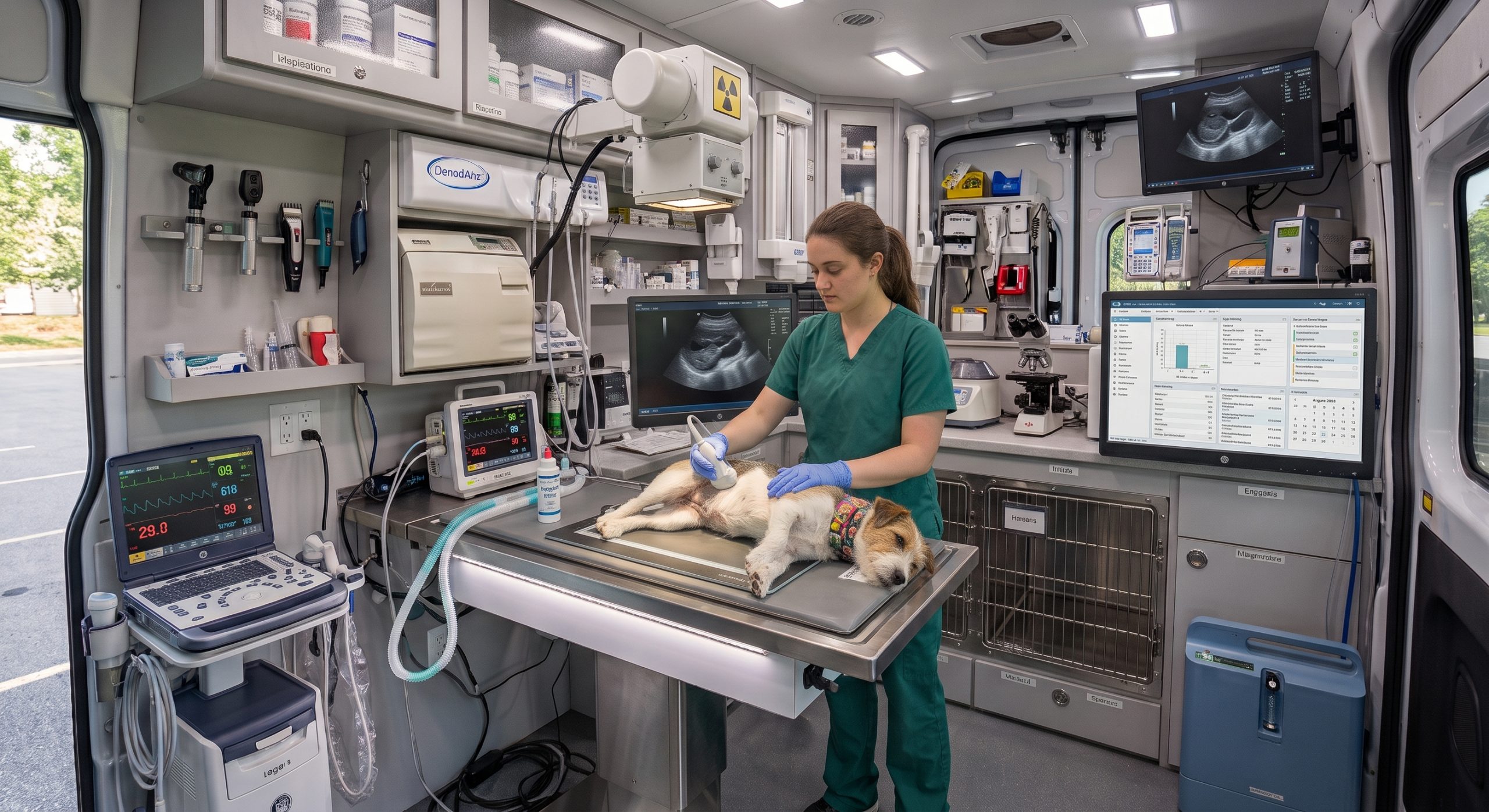 Real-time imaging
Quick Answer
Veterinary ultrasound uses sound waves to produce a real-time image of soft tissue and internal organs — the liver, kidneys, bladder, and intestinal tract. Where X-ray is best for bones and dense structures, ultrasound shows what is happening inside soft tissue, and the two are frequently used together during a sick visit at your home.
How an ultrasound appointment runs
Calm, quick, and almost always without sedation — in the place your pet already feels safe.
A calm setup
Your pet stays in familiar surroundings while the area to be scanned is gently prepared. No carrier, no car ride, no waiting room first.
Real-time scanning
The scan builds a live moving image rather than a single still frame, letting us watch organs and soft tissue as they actually move.
Findings explained live
Veterinarian talks through what the scan shows and what it means for your pet's care plan before anyone leaves.

When ultrasound is recommended
Often after an exam or bloodwork has flagged something worth examining more closely.
- Unexplained vomiting or abdominal discomfort
- Changes in urination or suspected bladder issues
- Monitoring an ongoing kidney or liver condition
- Following up on an abnormal blood panel
- Investigating a lump or swelling found on exam
- Building a fuller picture alongside X-ray findings
Common questions about veterinary ultrasound
How a scan works, whether sedation is needed, and what it shows.
X-ray is better for bones and dense structures; ultrasound is better for soft tissue and organs, and shows movement in real time. The two are complementary and often used in the same visit.
Usually not. Most pets tolerate a scan comfortably while awake, particularly at home where they are already relaxed. Dr. Jones will tell you in advance if your pet's situation calls for something different.
A small patch of fur usually needs clipping so the probe can make proper contact with the skin. It grows back normally, and we will always mention it before starting.
No. The probe rests against the skin with a little gel — most pets find it unremarkable, and many stay lying down throughout.
A closer look, without leaving home
Ultrasound completes our on-board diagnostics, alongside full laboratory testing and digital radiology.
